

Executive Summary
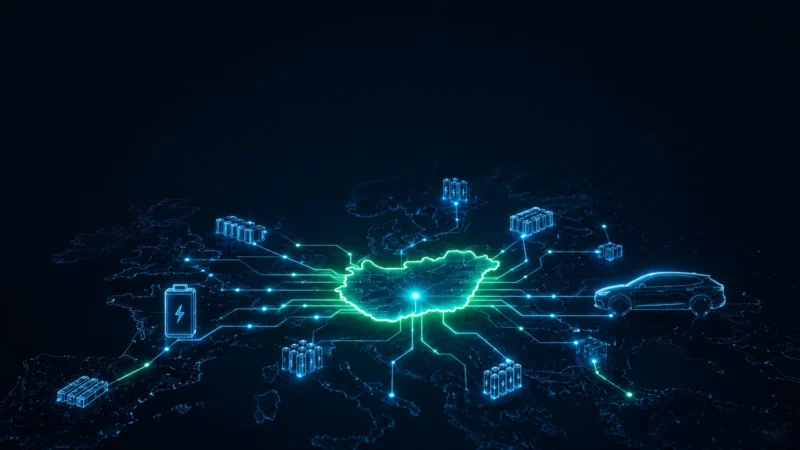
Hungary, a country of just 9.6 million people, is undergoing one of the most consequential industrial transformations in Europe. A landmark research report published on July 14, 2026 by the Shanghai University of International Business and Economics’ Central and Eastern Europe Research Center — commissioned by the Shanghai Philosophy and Social Science Planning Office — provides the most detailed strategic analysis to date of Hungary’s emergence as the European Union’s premier hub for new energy vehicle (NEV) and battery manufacturing.
The report’s central thesis challenges a common misconception: Hungary’s value to Chinese NEV and battery companies is not as a consumer market, but as a production, compliance, and supply-chain integration platform providing access to the entire European automotive ecosystem. With CATL’s 100 GWh battery gigafactory in Debrecen, BYD’s passenger vehicle plant in Szeged, BMW’s Neue Klasse EV production in Debrecen, and established manufacturing bases from Mercedes-Benz (Kecskemét) and Audi (Győr), Hungary has become a critical node in Europe’s electric vehicle supply chain — one where Chinese, Korean, and German industrial strategies converge.
This article provides a comprehensive synthesis of the report’s findings, covering market dynamics, investment landscape, entry strategies, risk assessment, and actionable recommendations for companies seeking to enter or expand in the European NEV supply chain through Hungary.
SEO Keywords: Hungary EV battery industry 2026, CATL Hungary Debrecen, BYD Szeged Hungary factory, European battery supply chain, China EV investment Europe, Hungary new energy vehicle report, EU Battery Regulation compliance, Central Europe EV manufacturing hub, Hungary automotive investment, Chinese battery companies Europe, NEV supply chain Europe, Hungary tax incentives manufacturing
Part I: Hungary’s Automotive Heritage and the EV Transformation
1.1 From Traditional Auto Hub to EV Supply Chain Powerhouse
Hungary’s automotive industry is not new. The country has been a manufacturing base for Mercedes-Benz (Kecskemét plant), Audi (Győr — one of the world’s largest engine plants), and Opel for decades. But what makes Hungary’s current moment different is the simultaneous arrival of three forces:
- Battery gigafactory investments at unprecedented scale (CATL 100 GWh, plus Samsung SDI, SK On)
- Electric vehicle production lines (BMW Neue Klasse in Debrecen, BYD passenger vehicles in Szeged)
- EU regulatory requirements (Battery Regulation, 2035 zero-emission mandate, carbon footprint rules) that make EU-based manufacturing increasingly necessary
The report estimates that this convergence has positioned Hungary as potentially the largest battery production hub in Europe by capacity under construction.
1.2 The Research Framework
Table 1: Report Specifications
| Parameter | Detail |
|---|---|
| Report Title | Hungary NEV & Battery Industry Development Research Report |
| Report Number | 2026-HY-E019 |
| Classification | HUN/NEV/IRR |
| Commissioning Body | Shanghai Philosophy and Social Science Planning Office |
| Implementing Platform | Shanghai Enterprise Overseas Development Integrated Service Platform |
| Research Institution | Shanghai University of International Business and Economics, Central and Eastern Europe Research Center |
| Publication Date | July 14, 2026 |
| Key References | IEA Global EV Outlook 2025, EU Regulations 2023/851 & 2023/1542, ACEA, HIPA, CATL, BYD |
Part II: Market Demand — Why Local EV Sales Are Not the Point
2.1 The Core Thesis
The most important analytical insight in the report is this: Hungary’s direct domestic NEV sales volume is not the primary investment rationale. The country’s population (9.6 million) and vehicle market size are modest by global standards. Instead, what drives the investment case is:
- European OEM local supply requirements: BMW, Mercedes-Benz, Audi, and BYD need locally sourced batteries, components, and systems
- EU Battery Regulation regionalization: Carbon footprint, traceability, recycled content, and battery passport requirements create incentives for EU-based manufacturing
- Trade policy uncertainty mitigation: Producing within the EU customs territory provides insulation against potential tariffs and trade remedies targeting Chinese EV and battery imports
2.2 European EV Market Context
Table 2: European EV Market Structural Drivers
| Driver | Status | Impact on Hungary |
|---|---|---|
| 2035 Zero-Emission Mandate | EU Regulation 2023/851 — 100% CO₂ reduction for new cars by 2035 | Guarantees long-term demand for EU-made batteries and EVs |
| OEM Platform Transformation | All major European OEMs converting to EV-native platforms (BMW Neue Klasse, Mercedes MMA/MB.EA, Audi PPE) | Requires entirely new supplier ecosystems near production sites |
| Corporate Fleet Electrification | Growing corporate and fleet commitments to EV transition | Provides stable, contractual demand base |
| Consumer Market Volatility | Some years show fluctuation due to subsidy changes, interest rates, consumer confidence | Near-term noise, not structural shift — long-term trajectory remains upward |
2.3 Five Demand Scenarios
The report identifies five distinct demand scenarios — each representing a different type of business opportunity for suppliers:
Table 3: Demand Scenarios and Target Products
| Demand Scenario | Source | Key Products / Capabilities Required |
|---|---|---|
| OEM Vehicle Integration | BMW, Mercedes, Audi, BYD assembly lines | Traction batteries, thermal management, e-drive, e-control, structural components, wiring harnesses |
| Battery Manufacturing Supply | CATL, SK On, Samsung SDI capacity expansion | Manufacturing equipment, tooling, testing, cleanroom engineering, materials, logistics |
| Charging Infrastructure | EU AFIR regulation + urban/highway charging demand | Charging stations, power modules, O&M platforms, storage-integrated charging |
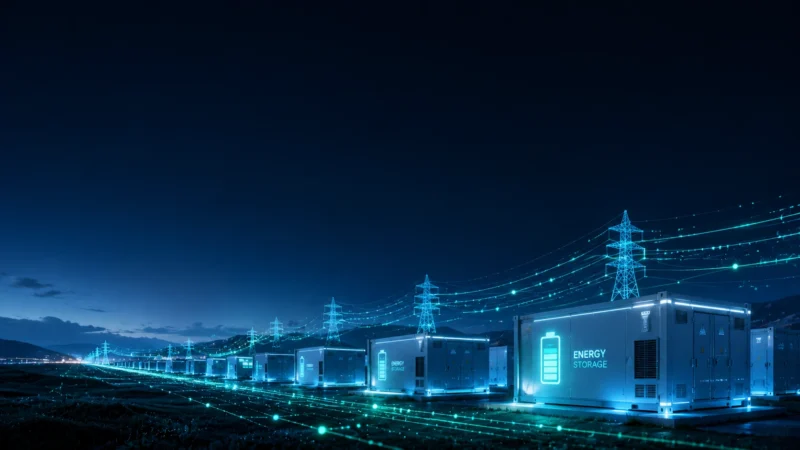
| Commercial & Industrial Energy Storage | Electricity price volatility, renewable integration, energy stability needs | BESS, EMS, PCS, fire safety, O&M services |
| Battery Recycling & Circular Economy | EU Battery Regulation + growing end-of-life battery volumes | Dismantling, black mass processing, recycled materials, traceability systems |



No comments yet